
How Influencer Marketing Can Grow Your Brand

Influencer marketing has evolved beyond celebrity endorsements and sponsored social posts. Today, businesses can work with creators who have highly engaged communities and influence within specific industries, interests, and niches.
But partnering with a creator does not automatically create business growth.
A creator can introduce your brand to thousands of people, but the real question is what happens after that attention is created.
What do you actually want influencer marketing to accomplish?
Maybe you need to introduce your brand to a new audience. Maybe you want more qualified leads, product sales, website traffic, or reusable content. The objective should determine the campaign, not simply the size of the creator's following.
Start With the Business Objective
Before searching for influencers, define the problem you are trying to solve.
Your campaign might be designed to:
Build awareness among a new audience
Generate qualified leads
Increase product or service sales
Drive traffic to a specific page
Build credibility within a niche
Create content your business can reuse
Test interest in a specific market
Each objective requires a different approach.
A campaign focused on awareness may prioritize reach and exposure. A lead-generation campaign needs a clear offer, landing page, tracking system, and follow-up process.
Without a defined objective, it becomes difficult to determine whether the campaign actually contributed to business growth.

Relevance Matters More Than Follower Count
A large following can make a creator look attractive on paper, but reach alone doesn't tell you whether the partnership is valuable.
A creator with 200,000 followers may reach very few people who actually need your product or service. A smaller creator may have a highly relevant audience that closely matches your ideal customer.
When evaluating creators, consider:
Who makes up their audience?
Does the audience match your target market?
What topics does the creator regularly discuss?
How does their audience respond to their content?
Does the creator have experience with similar products or services?
Can their traffic, leads, or sales be tracked?
The goal isn't to find the biggest audience possible.
It's to find the right audience for the business objective.

Trust Creates Interest, But Strategy Drives Action
One reason influencer marketing can be effective is familiarity.
People may already follow a creator because they find their content useful, entertaining, or relatable. When that creator introduces a product or service, the recommendation can feel more natural than a traditional advertisement.
But attention and trust don't automatically lead to conversion.
Someone can watch a video, become interested, visit your website, and still leave without taking action. What happens next matters.
Does the landing page match the creator's message? Is the offer easy to understand? Is there a clear next step? Can visitors quickly find the information they need?
The creator can create interest. Your marketing system has to turn that interest into action.

Think Beyond the Sponsored Post
The value of an influencer partnership doesn't necessarily end when the creator publishes the agreed content.
Depending on the contract and usage rights, creator content can potentially support multiple marketing channels.
A product demonstration could become paid advertising creative. A testimonial could be added to a landing page. An educational video could be repurposed for social media. Creator content could also support email campaigns or sales materials.
This changes how businesses should evaluate the partnership.
Instead of asking:
“How much did we pay for this post?”
also ask:
“What marketing assets did this partnership create?”
A single creator collaboration may produce content that supports several parts of the customer journey.

Give Creators Direction Without Over-Scripting Them
Creators understand their audiences and platforms. They know what types of content feel natural and what communication styles their followers respond to.
Brands should provide clear direction, but overly scripted content can make a creator partnership feel like a traditional advertisement.
Before the campaign begins, establish:
The campaign objective
Key product or service information
Required disclosures
Important brand guidelines
The desired call to action
Deadlines and deliverables
Content approval requirements
Usage and licensing rights
Then allow the creator to communicate the message in a way that fits their normal content.
Give creators a clear destination without controlling every step of the journey.

Make the Customer Journey Easy
Influencer marketing works within a larger funnel.
Consider the path:
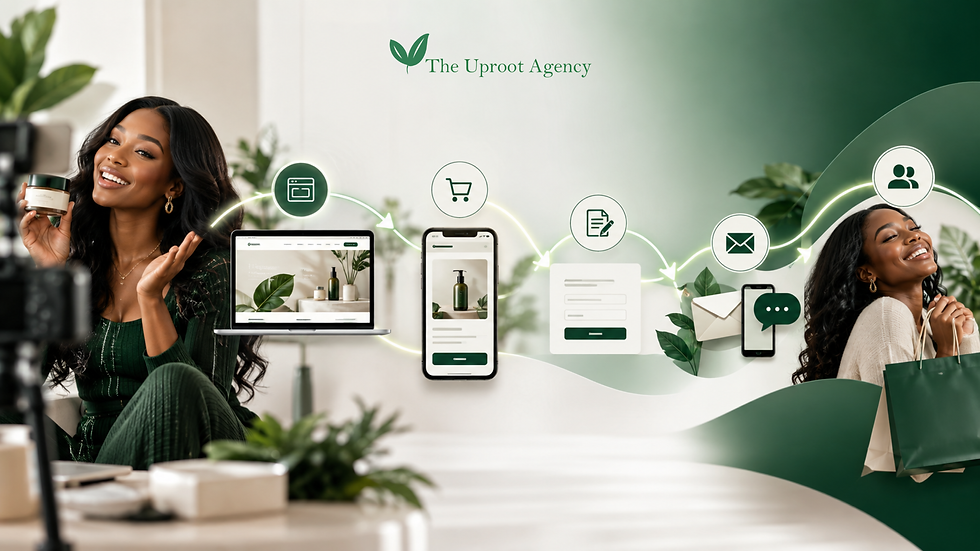
Creator content → Website → Offer → Conversion → Follow-up → Customer
Every step matters.
If people click but don't convert, the problem may be the landing page or offer.
If people submit forms but don't receive timely follow-up, the issue may be the sales process.
If people engage with the creator but don't understand what makes your business different, the messaging may need improvement.
This is why sending more traffic isn't always the solution.
If the funnel has a problem, more traffic can simply create more opportunities to lose potential customers.
Track What Actually Matters
Influencer campaigns should have a measurement strategy before they launch.
Depending on the objective, businesses can use:
UTM tracking
Unique links
Creator-specific landing pages
Discount or referral codes
Lead forms
Conversion tracking
CRM attribution
Platform analytics
The metrics should connect to the original business goal.
If the objective is lead generation, look at qualified leads and acquisition costs.
If the objective is sales, examine purchases and revenue.
If the objective is content creation, evaluate how the resulting assets perform across other channels.
Views, impressions, and likes can provide useful context, but they should not automatically be treated as proof of business impact.

Build the Campaign Around the Outcome
A strategic influencer campaign can follow a simple process:
1. Define the objective
Determine whether you need awareness, traffic, leads, sales, content, or another measurable outcome.
2. Identify the audience
Understand who you want to reach and what they care about.
3. Select relevant creators
Evaluate audience fit, content quality, engagement, subject matter, and credibility—not just follower count.
4. Prepare the customer journey
Make sure the website, landing page, offer, form, checkout, or booking process is ready before the campaign launches.
5. Establish tracking
Set up the systems needed to connect creator activity with meaningful results.
6. Clarify usage rights
If you want to reuse creator content in ads, on your website, or across social channels, establish those rights in advance.
7. Review performance
Measure the campaign against its original objective and use the results to improve future campaigns.
The TUA Perspective: Attention Isn't the Same as Growth
Influencer marketing can introduce your business to people who may never have discovered it otherwise. But attention is only the beginning. The bigger opportunity comes from connecting that attention to a marketing system designed to move people forward.
Creator content creates attention. Your strategy determines what happens next.
If the audience is relevant, the message is clear, the offer is compelling, the customer journey is easy to navigate, and the results are measurable, influencer marketing can become a valuable part of a broader growth strategy.
But if the website isn't converting, the offer is unclear, or leads aren't being followed up,
simply increasing reach may not solve the underlying problem.
That's why influencer marketing should be treated as a strategic channel, not a shortcut to growth.
The goal isn't simply to get your brand in front of more people. It's to create the right attention and give that attention somewhere valuable to go.



Comments